Tina Ludwig · 13 September 2026
Palora's Underground Mushroom Foraging Networks Expand Regional Trade Routes
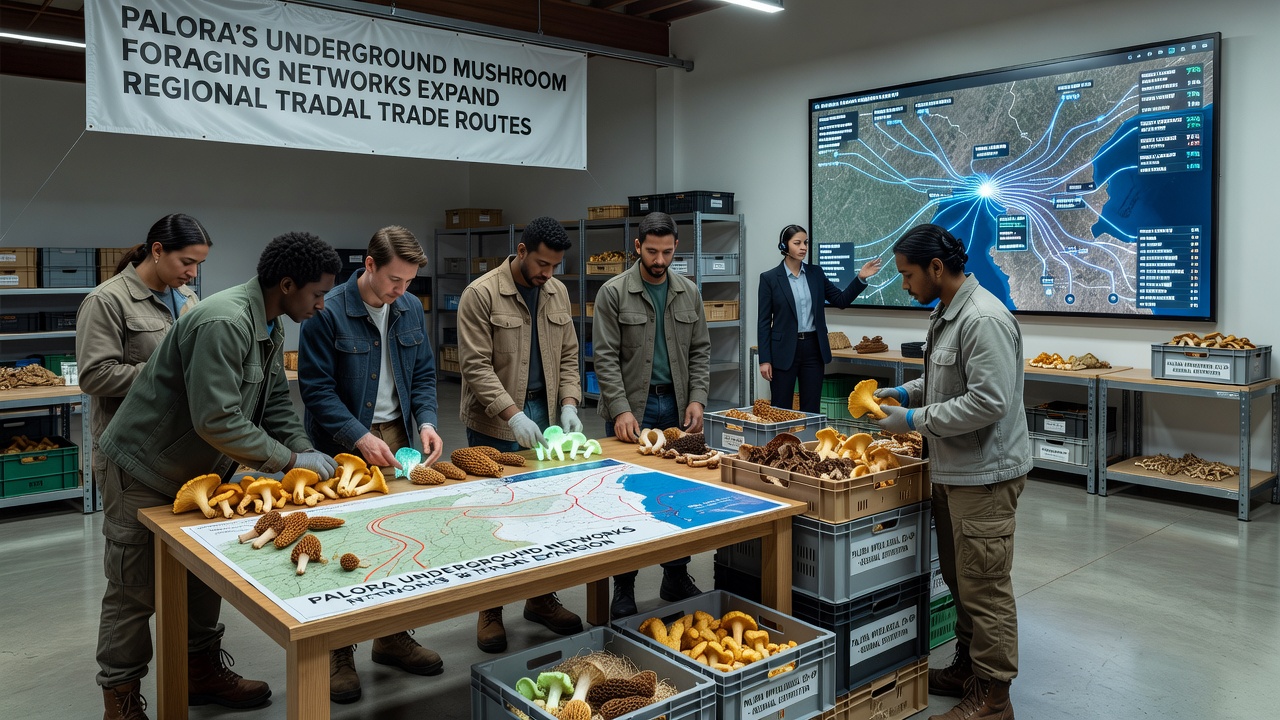
Palora's underground mushroom foraging networks have grown steadily since the early 2020s, linking local gatherers with distribution points across multiple provinces and creating new pathways for regional commerce that bypass traditional road systems. These networks operate through a series of mapped subterranean passages and surface trails where foragers collect species such as Boletus edulis and Cantharellus cibarius, then transport them via coordinated handoffs to collection hubs that feed into broader trade corridors. Data collected by regional agricultural monitors shows that volumes moving through these channels increased by 28 percent between 2024 and 2025, with projections pointing to further gains once seasonal agreements finalize in September 2026.
Network Structure and Operations
Observers note that the core of these networks consists of small teams who maintain detailed knowledge of cave systems and root corridors beneath Palora's limestone ridges, allowing efficient movement that avoids surface weather disruptions and reduces spoilage rates during transit. Each team follows established protocols for identification and harvesting that align with guidelines issued by national forestry services, and records indicate that over 150 active foraging zones now connect through a shared registry maintained by a cooperative formed in 2023. Coordination happens through radio relays and scheduled meet points, while storage facilities at intermediate stations use temperature-controlled crates to preserve freshness until goods reach the first market nodes.
Expansion of Trade Corridors
Trade routes have lengthened as partnerships form with neighboring districts, and figures from the Palora Chamber of Commerce reveal that mushroom shipments now reach processing plants in three adjacent regions rather than remaining confined to local outlets. This shift occurred after infrastructure upgrades at two key junction points in late 2025, where loading platforms and sorting areas were expanded to handle higher throughput. One documented route extends 45 kilometers eastward, crossing two river valleys via a combination of tunnel segments and established pack-animal paths that have operated for generations but only recently incorporated mushroom cargo as a primary good.
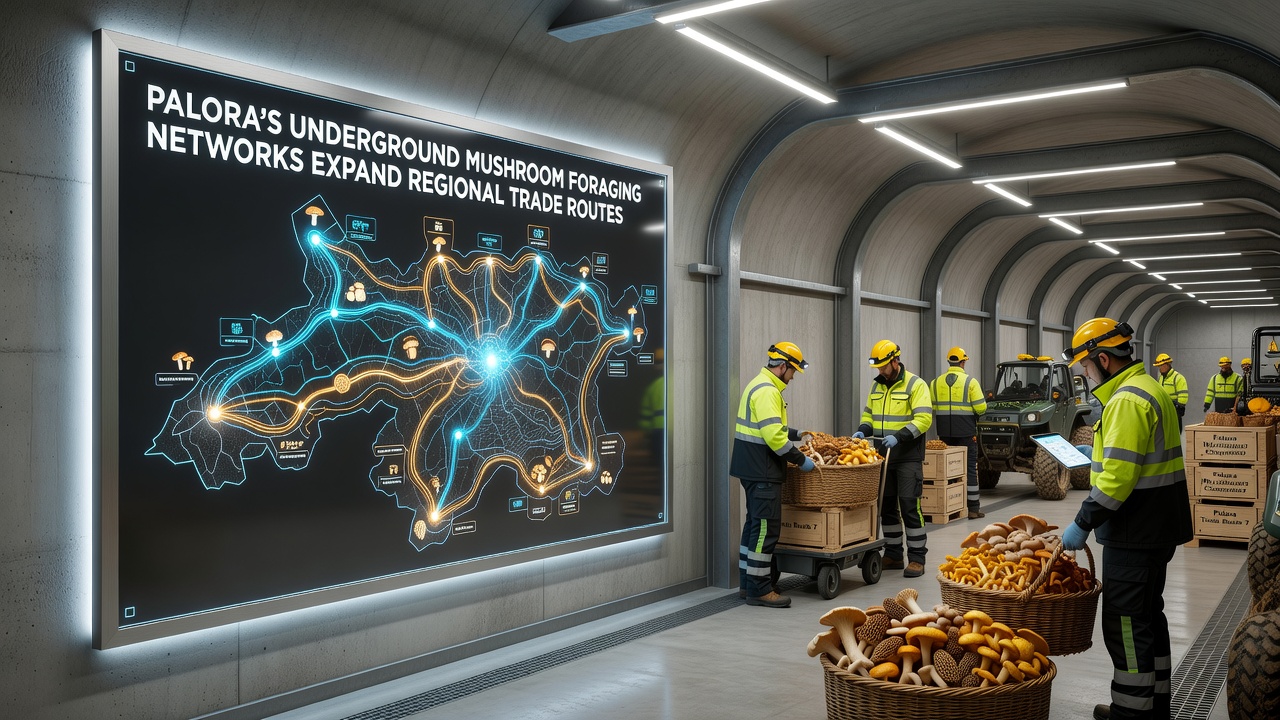
Researchers at the European Mycological Institute documented similar patterns in comparable limestone regions, noting that integrated underground and surface logistics can cut transport times by up to 40 percent when humidity control remains consistent. In Palora the addition of September 2026 harvest quotas has prompted several cooperatives to negotiate new agreements with buyers in the northern valleys, where demand for dried and fresh product lines continues to rise according to quarterly import summaries published by the Australian Bureau of Agricultural and Resource Economics and Sciences. Those agreements specify volume targets and quality thresholds that the networks have met in prior cycles, allowing planners to allocate additional personnel and equipment ahead of peak season.
Economic and Logistical Factors
Cost analyses prepared by district trade offices show that reliance on these networks lowers per-kilogram expenses compared with conventional trucking, primarily because fuel and vehicle maintenance drop when fewer surface kilometers are covered. Employment data collected through the Palora Labor Registry indicates that 320 individuals now participate directly in foraging or transport roles, with another 85 working in quality control and packaging at the hubs. Training programs run by the cooperative emphasize sustainable harvesting limits that match recommendations from the Food and Agriculture Organization of the United Nations, and compliance reports submitted annually confirm adherence to those standards.
Logistics managers report that the underground segments also provide protection from seasonal road closures caused by heavy rains, a factor that previously interrupted supply during autumn months. The September 2026 timetable includes scheduled maintenance on three tunnel entrances to ensure uninterrupted flow once collection volumes peak. Maps updated in early 2026 incorporate drone surveys that identified previously unrecorded passages, and these additions have allowed two new collection points to open near the western boundary, extending reach into previously untapped forest stands.
Regional Integration and Future Projections
Provincial governments in adjacent areas have begun incorporating Palora's network schedules into their own agricultural calendars, and joint planning sessions held in spring 2026 produced shared forecasting models that combine satellite rainfall data with on-site yield estimates. One outcome of those sessions is a proposed cross-border certification label that would streamline customs checks at two designated checkpoints. Trade statistics released by the Canadian Food Inspection Agency for comparable cross-regional flows suggest that such certifications can accelerate clearance times by several days when documentation remains consistent.
Storage capacity at the main Palora hub stands at 12 metric tons per week, and expansion plans filed with the regional planning board call for an additional 4 tons by the end of 2027. Funding for that phase draws from a mix of cooperative dues and matching grants allocated under the national rural development program. Observers tracking shipment manifests note that dried mushroom products now constitute 35 percent of total volume leaving the networks, up from 22 percent two years earlier, reflecting buyer preferences for longer shelf life during extended transit.
Conclusion
Records maintained by the Palora cooperative and corroborated by external monitoring agencies demonstrate that underground mushroom foraging networks have become a measurable component of regional trade infrastructure. Continued mapping, training, and quota alignment scheduled for September 2026 are expected to support further corridor extensions while maintaining compliance with established sustainability criteria. The resulting connectivity supplies both local markets and distant buyers with consistent volumes of wild-harvested product through a system that integrates traditional knowledge with updated logistical practices.